
How to learn hard things
by Jynn Nelson
One of the most valuable skills as a developer is learning new technologies and codebases. It’s a shame, then, that this skill is so rarely explicitly taught. In this workshop, you will get “exposure therapy” to working on hard problems with unfamiliar technologies, including debugging, development, and reading other people’s code.
This workshop does not require any particular prior knowledge; it is intentionally designed to be outside the comfort zone of most developers. Any level of experience, from student to Linux kernel or compiler hacker, is welcome.
The workshop will follow a learn‑by‑doing methodology, learning from peers and expert instructors. The exercises are shaped similarly to CTF challenges, but in a format that you might really see in an issue tracker or README. You are encouraged to work with and learn from other attendees :)
Exercises will include:
- a eBPF syscall tracer written in Rust
- a WASM sandbox for running Rust on the backend in a controlled environment
- LLVM coverage instrumentation internals
- distributed network proxies
- …and more!
Note: this workshop contains a wide array of exercises, some of which are highly platform specific. To make sure you can participate in as many as possible, please come with Linux and Docker already installed on your laptop. Full details of prerequisites are listed below. Don’t worry if you can’t install everything beforehand; there will be dedicated time for setup.
prerequisites
All talks: a working Rust toolchain.
- eBPF: Linux install with working Rust toolchain (docker or WSL ok). libbpf and linux-headers.
- Coverage: LLVM tools (not just clang). cargo-binutils provides an easy way to install these.
- WASM: docker.
- Network proxy: docker.
- libstdc++ symbols: docker.
Jynn Nelson
they/she/it
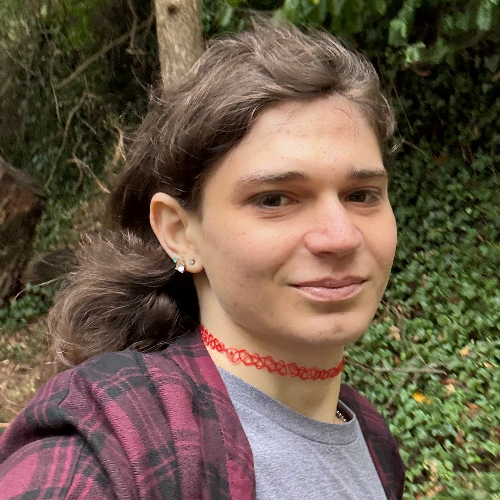
Jynn has been part of the Rust project for 7 years. Nominally they have held several titles of lead, but their specialty is in being a “jack-of-all-trades” who investigates gnarly problems no one else wants to look at. They think a lot about how to make computers more useful and fun, and how to decentralize programs away from large companies that reify power structures in their code. In their spare time, they play piano, visit dog parks, and go hiking in national parks.
Get your ticket
Workshops are held on Monday May 18 starting at 09:30 in Beatrixgebouw.
(note: this is not the same venue as the conference).
See the workshop event page for the location, time and other details.
Workshop tickets are available only in combination with a conference ticket. Choose 'Conference Ticket - Individuals' or 'Conference Ticket - Employer-paid', then select 'Workshop participation'. Proceed, and in the next steps select the workshop of your preference.